
Cities in Guizhou


Introduction
Guizhou is located in southwest China and borders Yunnan, Guangxi, Sichuan, and Hunan. The province is known for its mountains, karst landscapes, deep river valleys, and large rural areas. Guizhou is recognized for its minority cultures, especially Miao and Dong, as well as traditional villages and natural scenery.


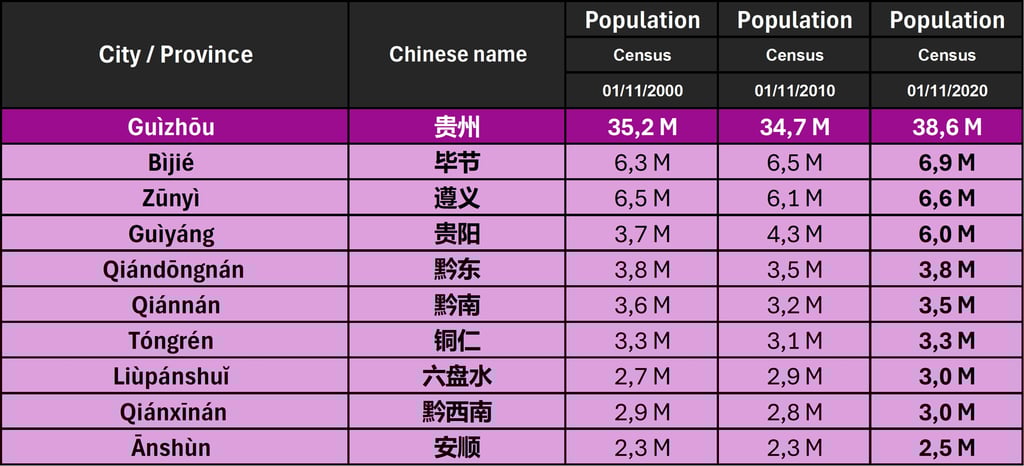
Guiyang is located in central Guizhou Province on a plateau surrounded by hills and forests. The city has a population of around 6 million and sits about 170 km from Anshun. Guiyang is known as a dynamic regional center that combines rapid development with a natural landscape.
Guiyang has become an important hub for big data, cloud computing, and high-tech services, supported by national development programs. Several leading technology companies operate research centers here.
The city also has a diverse cultural background, with multiple ethnic minority communities, including Miao and Buyi groups, contributing to local cultural heritage. Guiyang is home to universities such as Guizhou University and Guizhou Normal University, which support education, language research, and regional innovation.
📍 Main places to visit include Qianling Mountain Park, Jiaxiu Tower, Huaxi Scenic Area, Qingyan Ancient Town, Guizhou Provincial Museum, Dashizi Square.
Guiyang (贵阳)
Zunyi (遵义)
Zunyi is located in northern Guizhou, surrounded by hilly landscapes and river valleys. The population is about 7 million, and the city is around 150 km north of Guiyang. Zunyi is known for its role in modern Chinese history and its developed agricultural resources.
The city is recognized for the Zunyi Conference, an important moment in the history of the Communist Party of China. Zunyi is also known for producing tea, agricultural products, and light industry. Academic institutions such as Zunyi Medical University help support research and medical training in the region.
📍 Main places to visit include Zunyi Conference Site, Hailongtun Fortress, Chishui Danxia Park, Long March Memorial, Tashan Park.


Anshun is located in western Guizhou, about 90 km from Guiyang, with a population of around 2 million. The area is known for natural landscapes shaped by limestone formations and rivers.
Anshun has a long connection to karst landscapes, traditional handicrafts, and the culture of local ethnic minority groups. The city plays a key role in developing ecotourism, conservation, and cultural protection as part of the regional economy. It also has growing education and training centers connected to the tourism sector.
📍 Main places to visit include Huangguoshu Waterfall, Dragon Palace Cave, Tianlong Tunpu Ancient Town, Getu River Scenic Area, Guanling National Geopark.
Anshun (安顺)
Liupanshui (六盘水)
Liupanshui is located in western Guizhou and has a population close to 3 million. The area includes highland terrain and cooler temperatures.
Known for coal mining, transportation infrastructure, and natural plateau scenery, Liupanshui plays an important role in regional logistics. The city is also expanding tourism linked to mountain parks and preserved natural areas.
📍 Main places to visit include Yushe National Forest Park, Shuicheng Ancient Town, Meihuashan Scenic Area, Qinglong Cave.
Bijie (毕节)
Bijie is located in northwestern Guizhou on a mountainous plateau and has a population of around 6 million. It is about 180 km from Guiyang.
The city is known for agriculture, environmental restoration projects, and regional development programs. Bijie continues to expand its education system and research sectors to support sustainable growth.
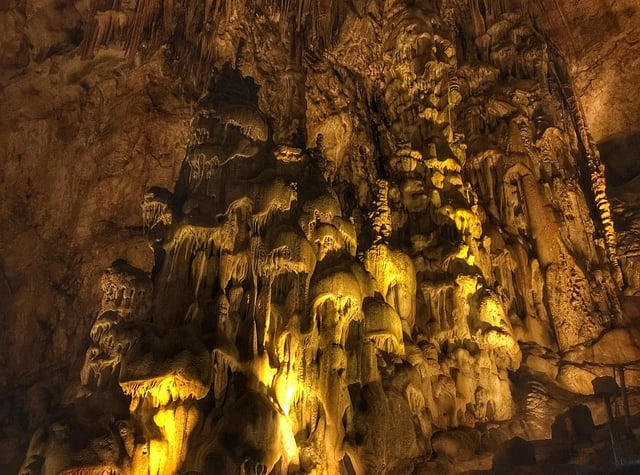
📍 Main places to visit include Zhijin Cave, Caohai Lake, Hezhang Grassland, Baling River Bridge.
Kaili (凯里)
Kaili is located in southeastern Guizhou with valleys, rivers, and mountain areas. The population is around 0.5 million. It is roughly 130 km from Guiyang.
Kaili is recognized as a center of Miao and Dong minority culture, with well-preserved traditions in craftwork, silver decorations, and festivals. Cultural research and language development also play a role in local education programs.
📍 Main places to visit include Xijiang Qianhu Miao Village, Langde Miao Village, Kaili Museum, Leigongshan Mountain.
Tongren (铜仁)
Tongren is located in northeastern Guizhou near the border with Hunan, with a population of around 3 million.
The city is known for its ethnic culture, religious sites, and natural reserves. It has increasing research and education development linked to cultural studies and ecology.
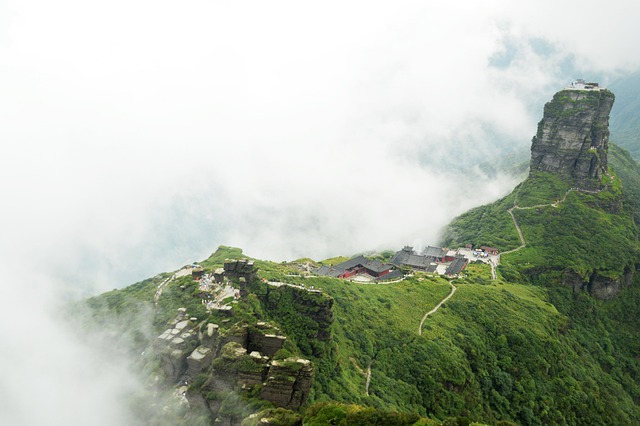
📍 Main places to visit include Fanjing Mountain, Jiulong Cave, Shiqian Hot Springs.
Navigation
Main Menu
nathan.china-sphere.com
© 2025. All rights reserved.